Tuesday, January 29, 2013

Artist of the Week


Hudson K-8's artist of the week is 7th grader, Steven Hawkins. Steven freehanded an excellent likeness of an expressive portrait found in lesson 2 of the Glencoe's class set textbook series Understanding Art.  In lesson 2, Steven learned how to create a portrait drawing in which the subject matter is using distortion and exaggeration to show a particular mood or feeling.

The color scheme used in Hawkins' artwork is used to emphasize the mood or feeling of the character. The theme used in creating the portrait is also the theme of the lesson, which is creating an expressive portrait.


The lesson was fashioned to experience the style and expression of artist William H. Johnson (pictured above) an African American painter born in Florence, South Carolina, and is becoming more widely recognized as one of the greatest American artists of the 20th Century. Johnson became a student at the Nation Academy of Design in New York. As his style evolved from realism to expressionism to a powerful folk style (for which he is best known), his work always evokes transitory and sublime sensations, that have been often mimicked but never matched. Without question, he has widened the perimeter of how the Negro historical experience will be remembered and how it will be defined in the future.

Before his death he donated all of his work to the National Museum of American Art, now the Smithsonian American Art Museum. In 2006, the Smithsonian American Art Museum organized and circulated a major exhibition of his works, William H. Johnson’s World on Paper. The exhibition traveled to the Montgomery Museum of Fine Arts in 2007.
 

His use of the African American community of both Harlem and South Carolina as well as a very conscience "folk" style of painting helps to show how the concept of "self" was linked to the tradition and change in Harlem. By casting an urban scene within a rural style of painting Johnson speaks to the sense of the new, urban, African American community is formed from the displaced parts of past communities.

Resources:

William H. Johnson: Smithsonian American Art Museum

YouTube: Freehand Drawing

Portrait Art Lessons


Monday, January 28, 2013

Paper Basket Weaving


Weaving is one of the most ancient forms of human creativity. Baskets and textiles would not have been possible without weaving. To a develop basic knowledge and gain experience with weaving. Students will produce a simple weaving project and will be able to discuss the basic vocabulary of weaving. This project will give students experience working with the basic concept of weaving. In this project, the student will use colored construction paper to produce a woven paper basket.

This project can be expanded to challenge the creativity of students by using more colors, making the weft threads thinner and the designs more detailed. The warp can be measured using rulers and will result in more precise designs. The simple over-under sequence can be altered from every other warp to every second or even third warp to form a regular pattern that will differ from the standard "checker board" style design.

Additional Resources:

Lesson Plans: Basket Weaving

Pinterest: Fun baskets to weave

DLTK's Bible Crafts for Kids

Wednesday, January 23, 2013

Drawing 3D Shapes


Designed as an introduction to shapes, students will develop a mathematic concept of geometry through art. In this activity, students will identify, recognize and draw a two-dimensional square and subsequently a three-dimensional cube. Students will then draw a two-dimensional triangle and subsequently a three-dimensional cone. Finally, students will draw a two-dimensional circle and subsequently a three-dimensional sphere.


Skills that will be taught through this lesson are problem solving, classifying, patterning, graphing and comparison and contrast. Additionally, students will aquire a fundamental understanding of basic shapes by creating isometric drawings of a cube, a cone, and a sphere (as shown above). In an isometric drawing, the object's vertical lines are drawn vertically and the horizontal lines in the width and depth planes are shown at 30 degrees to the horizonal. Lines that are not parallel to these axes will not be of their true length.

Additional Sources:

Isometric Basics

Perspective Drawing

Drawing Basic Shapes

Artist of the Week


7th grader, Na'Quisha Kelley, is Hudson K-8 student of the week. Na'Quisha (pictured above) demonstrated her mastery of the fundamental skill of basket weaving as she worked diligently at weaving her basket (pictured at the bottom) from colored construction paper. While basket weaving is one of the widest spread crafts in the history of any human civilization it is hard to say just how old the craft is because natural materials like wood, grass, and animal remains decay naturally and constantly. So without proper preservation, much of the history of basket making has been lost and is simply speculated upon.

The oldest known baskets have been carbon dated to between 10,000 and 12,000 years old, earlier than any established dates for archeological finds of pottery, and were discovered in Faiyum in upper Egypt.

Other baskets have been discovered in the Middle East that are up to 7,000 years old. However, baskets seldom survive, as they are made from perishable materials. The most common evidence of a knowledge of basketry is an imprint of the weave on fragments of clay pots, formed by packing clay on the walls of the basket and firing.


South Africa is famous for its tightly woven Zulu baskets( shown above).  These hand woven African baskets are a true art form and are functional, beautiful and decorative as well as a testament to fine weaving skills.  Zulu baskets are considered some of the most collectable baskets in the world.  Master Zulu weavers are published and collected worldwide. Master Zulu weavers are published and collected worldwide. 

Wednesday, November 28, 2012

Artist of the week


5th grader, Jhalon Snowden, is Hudson K-8's artist of the week. Jhalon (pictured above) is rendering an impressive likeness of a work of art originally painted by Marianne von Werefkin in 1908 entitled Washerwomen. The painting is featured in unit 1 lesson 3 of the Scott Foresman textbook on geometric and organic shapes, one of the elements of art.

Werefkin was well educated according to western standards. She created her first expressionist works in 1907. In these she followed Paul Gauguin's and Louis Anquetin's style of "surface painting", while also showing the influence of Edvard Munch. In 1909, the Neue Künstlervereinigung München (New Association of Artists in Munich, NKVM) was founded. It became a forum of exhibitions and programming. It is befitting that Jhalon is receiving early recognition for her artistic talent Just as Von Werefkin's artistic talents were recognized early as a young girl and encouraged.

Thursday, November 1, 2012

Portrait Drawing 101

Portraiture can be a hard subject to teach because students at the secondary level are obsessed with realism and can get discouraged easily. This lesson on drawing portraits  can help show students that they can create representational portraits that look like the person they want to capture. Below is a video of an example of the type of drawing technique that will be taught in my class:


Students will learn about proportion in relation to facial features. The student will learn the process of developing the proper technique to capture accurate proportions through tutorials given at the beginning and periodically throughout class. Students will recieve detailed instruction on the purpose and use of drawing tools as well as shading and various other drawing techniques in order to add depth and space to their finished products. In the video below are my students in the process of developing their rendering skills in the classroom:


In addition, students will be presented with a demonstration on using professional rendering techniques to utilize for drawings and paintings. This should be a hands-on demonstration so that students can see each step of the process. I will present the concept of facial proportions and students may spend a couple class periods drawing facial features in their proper locations.

Students will work while the teacher walks around and monitors progress. Students will have 10 days to complete the assignment.

Resources

How to Draw a Manga Face
Fundamentals Of Pencil Portrait Drawing Mastery
Archive for the ‘Drawing Comics & Super Heroes’ Category
spacer


Tuesday, October 30, 2012

Japanese Lanterns


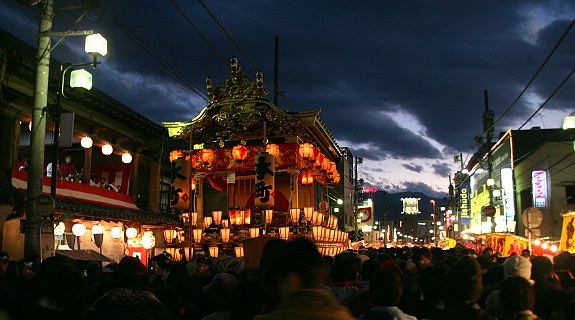
In comparison to Western art, traditional Japanese art is very much a part of everyday life and beauty is found in simple, humble things.With its introduction by a traveler from the Asian continent in the 1500s the convention of the Japanese lantern continues today as a cultural icon. Starting with use in temples and marking holy grounds in carved stone lights, the paper lantern rapidly took precedence to became a household utility, surpassed only by employment of enterprising inn and shop keepers to advertise room vacancies and food items. The worldly use of stone lanterns evolved with the sacred tea ceremony. Today, the institution of the Japanese lantern use is an evolutionary mix of the paper orb lamp and the modern flashing lights in its cities.


Students will select 1 traditional japanese festival from 3 different traditional Japanese festivals, and research the cultural significance of the chosen festival. Students will choose from  Nagasaki Kunchi, a festival held in Nagasaki, Japan where five to seven groups of performers perform each year, presenting traditional Japanese dances, Chinese influenced dragon dances or performances involving large floats, many of which are shaped like ships.  The Kanto Matsuri--In this festival, the highlight of the festival is an impressive display of skill in which performers balance kanto, or long bamboo poles with arrays of paper lanterns attached to the end. And lastly, The Chichibu Night Festival is considered one of Japan's top three festivals to feature floats. Its floats are ornately decorated with lanterns, tapestries and gilded wood carvings and are accompanied by drum and flute music.


      The objectives of the project are as follows:


1.       Students will observe traditional Japanese paintings and be able to describe the aesthetics of simplicity, beauty and reverence for nature.


2.       Students will choose patterns, design elements and subject matter that relate to this historic culture for their own artworks.

3.       Students will create a free-standing 3-dimensional, functional piece from a flat painting.


Resources: